
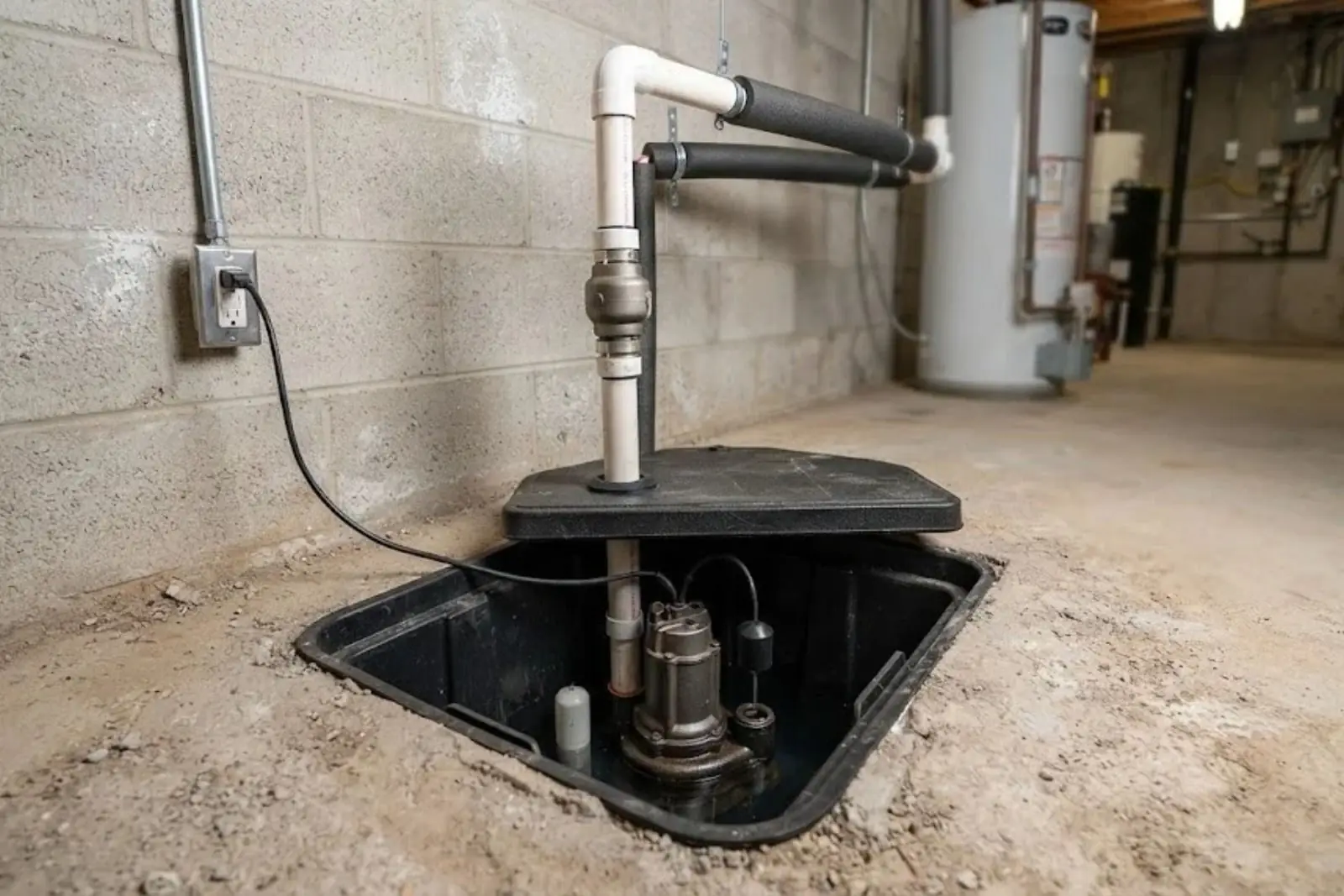
A backup sump pump is a second pump that takes over when the main pump fails or the power goes out. Most homes use a battery powered pump set slightly higher in the pit than the main pump, so it turns on only when water keeps rising. Installing one takes a few hours and protects the basement during the worst storms.
This guide covers the types of backup, what the install involves and the checks to make first. Our sump pump service installs, tests and repairs both main and backup pumps.
The RiskWhy A Backup Is Worth Considering
Storms that flood basements also knock out power. A main pump with no power does nothing. Pumps also fail from age, a stuck float or a clogged intake, and those failures often happen at the worst time.
A backup does not guarantee a dry basement. It buys time and covers common failure modes.
ChoicesTypes Of Backup
Battery powered backup
- Works when the power is out
- Runs for hours on a charged battery
- Needs battery replacement every few years
- Common and easy to install
Water powered backup
- Runs on household water pressure
- No battery to maintain
- Needs a municipal water supply and a discharge path
- Uses water and is not meant for long runs
Many people pick a battery backup because it is simple. If your power outages are long, a larger battery or a generator plan matters more.
ProcessWhat The Install Involves
Check the pit
The pit needs room for a second pump and clean access.
Set the backup
Mount the pump slightly higher than the main pump so it starts second.
Connect the discharge
Tie into the discharge line with a check valve so water does not flow back.
Test both pumps
Pour water into the pit and verify each pump starts at the right level.
A common mistake is putting both pumps on the same discharge line without checking flow. Two pumps pushing into one line can reduce the flow of each. The plumber checks the line size and the check valve.
Before the install, check
- The main pump runs and its float moves freely
- The discharge line is clear and drains away from the foundation
- There is a check valve on the main pump
- The pit is clean of silt and debris
- There is an outlet or a place for the charger
Maintenance Keeps It Ready
Test both pumps every few months by pouring water into the pit. Clean the pit if silt builds up. Replace the battery on the schedule the maker gives, and keep the charger plugged in.
Many backups include an alarm that sounds when water is high. Make sure you can hear it, or connect it to a monitor if you are away often.
EmergencyIf The Pit Is Already Filling
If water is rising and the pump is silent, check the plug and the breaker, lift stored items off the floor and call us. We answer around the clock and will help you decide what to do while a plumber is on the way. See basement waterproofing if the water keeps returning.
Sump pump installs are scheduled in Lehi and in American Fork. Use the service area page to check other towns.
MaintenanceTesting The System Twice A Year
Pour a bucket of water into the pit and watch the float rise. The pump should start, empty the pit and shut off without chattering. Test the backup the same way by unplugging the main pump for a moment.
Check the discharge line outside. It should carry water well away from the foundation and should not freeze shut or sit blocked by debris. A check valve on the line stops water from flowing back into the pit.
Battery backups need a fresh battery when the maker says so, and the charger needs power. Ask what happens if the power is out for several hours, since a battery eventually runs down.
SizingSizing And Placement Questions
Pump size should match how fast the pit fills during heavy melt or rain, not just the horsepower rating. A pit that is too small makes the pump cycle on and off often. Ask us to look at the pit depth and the discharge route before you buy.
The backup pump sits beside or above the main pump so it can start if the main fails. Each needs its own float switch and a path to the discharge line.
Questions about your own house? Call (385) 488-1892 and a person will answer.
FAQsBackup Sump Pump Questions
It depends on the battery size and how often the pump runs. Many run for several hours of continuous pumping.
A new pump still stops when the power goes out. A backup covers power loss as well as pump failure.
Many people can, but the discharge connection and check valve need care. A plumber can install and test the whole system.
Every few months, and before spring melt. Pour water in the pit and confirm each pump starts and empties the pit.
Not directly. Ask a radon professional about sealing the pit lid and testing the lowest living level of the home.