
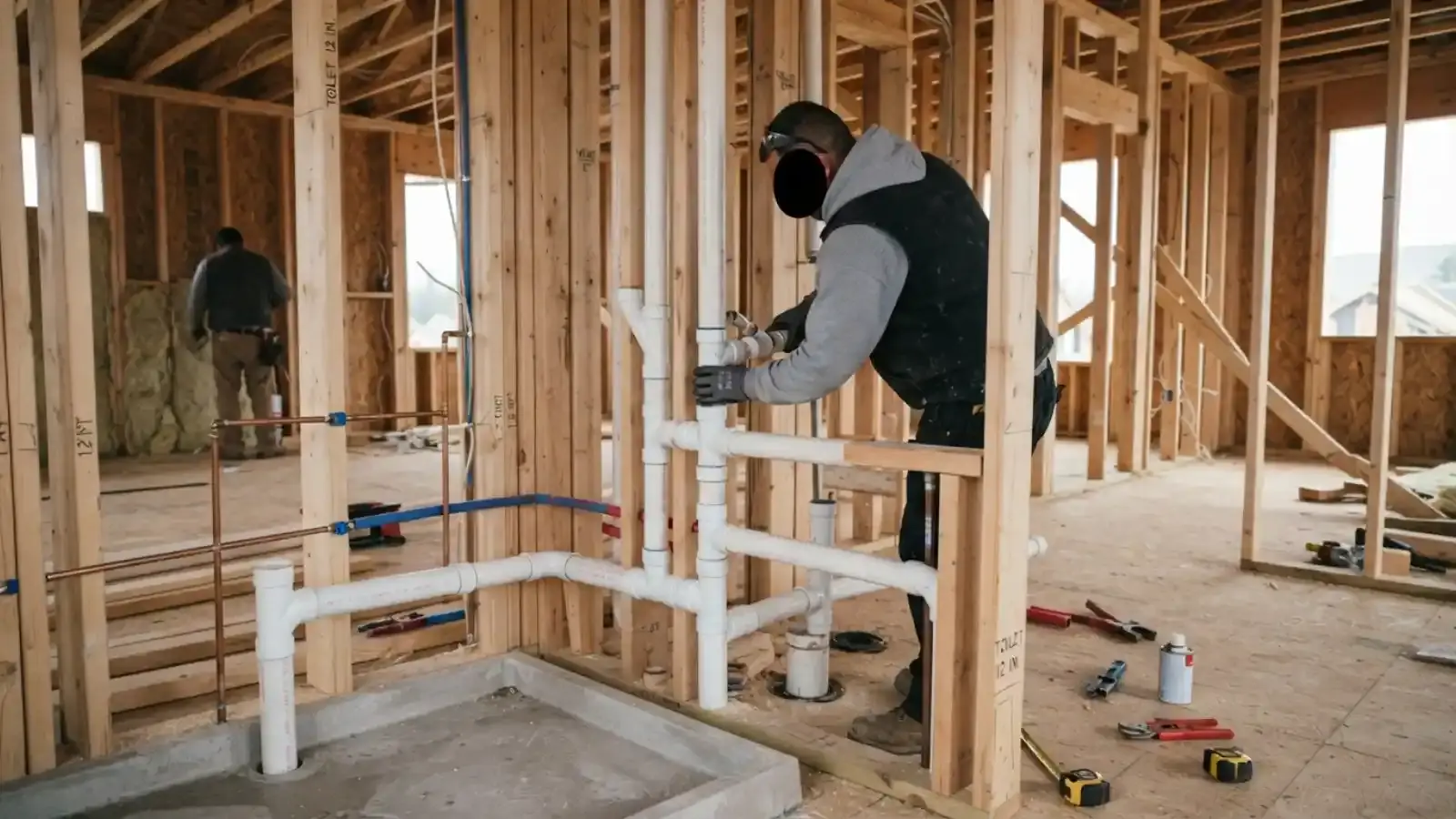
A plumbing vent pipe runs from a drain line up through the roof so air can enter the system behind flowing water. Without it, drains gurgle, traps can empty and sewer gas can leak into the room. Vents are usually placed near each fixture group and tie into a stack that exits above the roofline.
The exact location depends on the fixture layout and the plumbing code. This guide explains the common patterns so you can read your own system. If you are planning new work, our plumbing installation service handles rough in, venting and inspection.
The BasicsWhy Drains Need Air
Water leaving a drain pulls air behind it. If air cannot come in, a vacuum forms and pulls water out of the trap. A trap holds a plug of water that blocks sewer gas, so an empty trap is more than a nuisance.
A vent also lets pressure escape when water rushes down the line. That keeps drains quiet and flowing smoothly.
Typical LayoutsWhere Vents Are Placed
| Vent type | How it works | Where you see it |
|---|---|---|
| Individual vent | A dedicated pipe for one fixture | Behind a toilet or sink wall |
| Common vent | One pipe serves two fixtures on opposite sides of a wall | Back to back bathrooms |
| Wet vent | A drain line also carries vent air for upstream fixtures | Bathroom groups |
| Air admittance valve | A one way valve that lets air in | Island sinks and remodels, where code allows |
| Main stack vent | The vertical stack that continues through the roof | Roof penetration |
Which type applies depends on the code and the inspector. Utah follows its adopted plumbing code with statewide amendments, so a plumber should check the current rules for your job.
Trap To VentDistance Matters
Each fixture trap must be within a certain distance of its vent, and the distance depends on pipe size. Too far, and the trap can siphon. This is why a long run to a remote bathroom may need an extra vent or a different layout.
Rules of thumb
- Drains slope downward toward the main, vents rise upward
- Vents tie in above the flood rim of the fixture before going horizontal
- The vent should not be allowed to fill with water
- Roof vents should be clear of windows and air intakes
Where Vents Leave The Roof
Vent pipes usually exit the roof as a plain pipe, often capped with a flashing boot. In a cold climate, a vent pipe can frost over at the top when warm moist air hits cold air. A larger pipe size at the termination helps keep it from closing.
After snow, check that vent tops are not buried. A blocked vent can cause gurgling or slow draining in cold weather.
SymptomsSigns Of A Vent Problem
Common clues
- Gurgling sounds from a drain when another fixture runs
- Slow draining with no clog found
- A sewer smell in the bathroom
- A toilet that bubbles when the shower drains
- Water that is pulled out of a trap and leaves it dry
These signs overlap with a clogged drain. If a cable does not help, the vent may be at fault. Our drain cleaning service can rule out a blockage before suggesting a vent repair.
Repair OptionsFixing A Missing Or Blocked Vent
A blocked vent is often cleared from the roof with a cable or a hose. A missing vent is more work. The plumber may add a new vent through a wall or attic, or use a code approved air admittance valve where it is allowed.
Roof work carries fall risk, so leave vent clearing to a pro. Vent work is quoted by phone for Lehi homes and for American Fork addresses. The service area page lists every town we cover.
SymptomsWhy Vent Problems Are Hard To Spot
A blocked vent rarely floods a room. It shows up as slow drains, gurgling sounds and a sewer smell that comes and goes. Because the symptoms look like a clogged drain, many people cable the line and see no change.
Common causes include leaves, bird nests, frost buildup in winter and a collapsed section of old pipe. Snow and ice can narrow the roof opening on a cold night even when summer looks fine. A plumber can check the line with a camera or a flexible tool from the roof.
Never climb onto a roof in wet or icy conditions. A gurgle in one fixture when another drains is enough to describe the problem on the phone.
Questions about your own house? Call (385) 488-1892 and a person will answer.
Vent size, slope and termination are set by the International Plumbing Code (IPC) as Utah amends it, which is one reason we do not guess at a vent route from a photo.
FAQsVent Pipe Questions
Every fixture needs a path to a vent. The number depends on the layout and the code, and a plumber can count them in a quick walk through.
Only where the code and the inspector allow it. Ask Lehi Building and Inspections at (385) 201-1035 before installing one.
It can mean a partial clog or a vent problem. If clearing the drain does not stop the gurgle, ask for a vent check.
Yes. Debris, nests and frost at the top can partly block a vent and cause gurgling.
Away from windows and air intakes, and above the roofline by the height the code requires.