
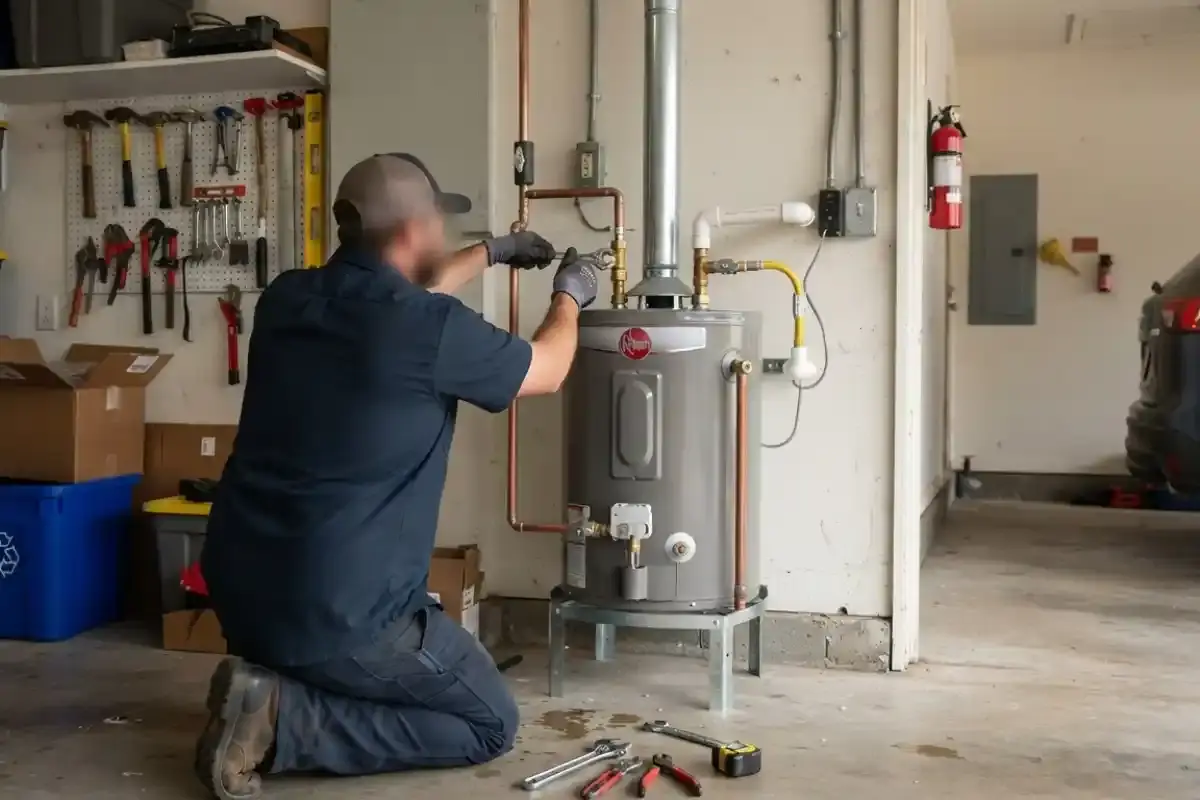
A water heater igniter lights the burner on newer gas tanks that do not use a standing pilot. When it fails, the control tries to start, nothing lights and the unit stays cold. Replacing the igniter is a repair some homeowners handle, but it involves gas parts and a sealed burner chamber, so the safety steps matter more than the wrench work.
This guide explains how to confirm a bad igniter and what the replacement involves. If you would rather have it done, our water heater repair service covers igniters, thermocouples and gas controls.
Gas RulesSafety Before Anything Else
Stop and call for help if
- You smell gas at any time
- The burner area shows soot or scorch marks
- The gas valve will not turn fully off
- You are unsure which part is the igniter and which is the flame sensor
If you smell gas, leave the house and call 911 and the gas utility. Enbridge Gas lists 1-800-767-1689. Do not light anything or use a switch until the building is cleared.
Know Your UnitPilot Style And Igniter Style Are Different
| Type | How it lights | What fails |
|---|---|---|
| Standing pilot | A small flame stays lit and a thermocouple proves it | Thermocouple, pilot tube or gas control |
| Hot surface igniter | A glowing element lights the burner on demand | The igniter or the flame sensor |
| Electronic spark | A spark lights a pilot then the burner | Spark electrode or control board |
Read the label on the heater and the owner manual. The parts and steps differ by model, and the wrong part can be unsafe.
DiagnosisConfirm The Igniter Is The Problem
A failed igniter usually shows as no glow, a cracked element or a unit that clicks and gives up. A flame sensor that is dirty can cause a similar pattern, where the burner lights and shuts off after a few seconds.
Many units show a status light that blinks a code. The manual explains what each pattern means. A code for ignition failure points toward the igniter, the sensor or the gas supply.
ProcessThe Replacement Steps
Shut off gas and power
Close the gas valve and turn the control to off. Disconnect electric power if the unit has it.
Open the burner cover
Remove the outer door and the sealed burner door according to the manual.
Swap the igniter
Disconnect the wire, release the bracket, install the new part in the same position.
Restore and test
Close covers, open the gas, light the unit and watch it fire.
Handle the new igniter by its base. Oils from skin can shorten the life of the element. Keep the burner chamber free of dust and lint, because those can cause ignition faults too.
Honest AdviceWhen Replacing The Part Is Not Enough
If the tank is old and rusting, a new igniter does not fix the larger problem. A tank that is more than ten years old and leaking from the body is a replacement case. Our water heater replacement page explains how to decide.
Repeated ignition failures can also point to a venting or gas supply issue. A plumber can test gas pressure and check the flue.
MaintenancePreventing The Next Failure
Flush sediment from the tank once a year, keep the area around the heater clear of storage and vacuum dust from the burner area if the manual allows it. A working carbon monoxide alarm near the heater is a smart safeguard for any gas appliance.
We service gas water heaters across Lehi and in nearby towns such as American Fork. The areas page lists the rest.
SafetySafety Steps Before You Touch The Burner
If you smell gas, leave the house and call the gas utility and 911 from outside. Do not flip switches or use a lighter. A gas smell is never a do it yourself situation.
For a routine igniter check, set the gas control to off and wait five minutes so the area can air out. Look for a cracked ceramic, a dirty tip or a loose wire. Never use an open flame to test the unit.
If the igniter glows but the burner does not light, the gas valve, the flame sensor or a blocked vent may be at fault. Those need a plumber. Replacing parts without finding the cause leads to repeat failures.
Questions about your own house? Call (385) 488-1892 and a person will answer.
FAQsIgniter Questions
The igniter glows or sparks to light the burner. The flame sensor is a thin rod in the flame path that proves the flame is on. Check the manual for your model.
Not reliably. Use the exact part for your model, because shape, resistance and mounting differ.
It depends on the unit and use. Hot surface igniters are fragile and can fail without warning.
No. The igniter sits in the burner area, not in the water side of the tank.
Only if you are comfortable shutting off gas and following the manual. If you smell gas or are unsure, call a plumber.