
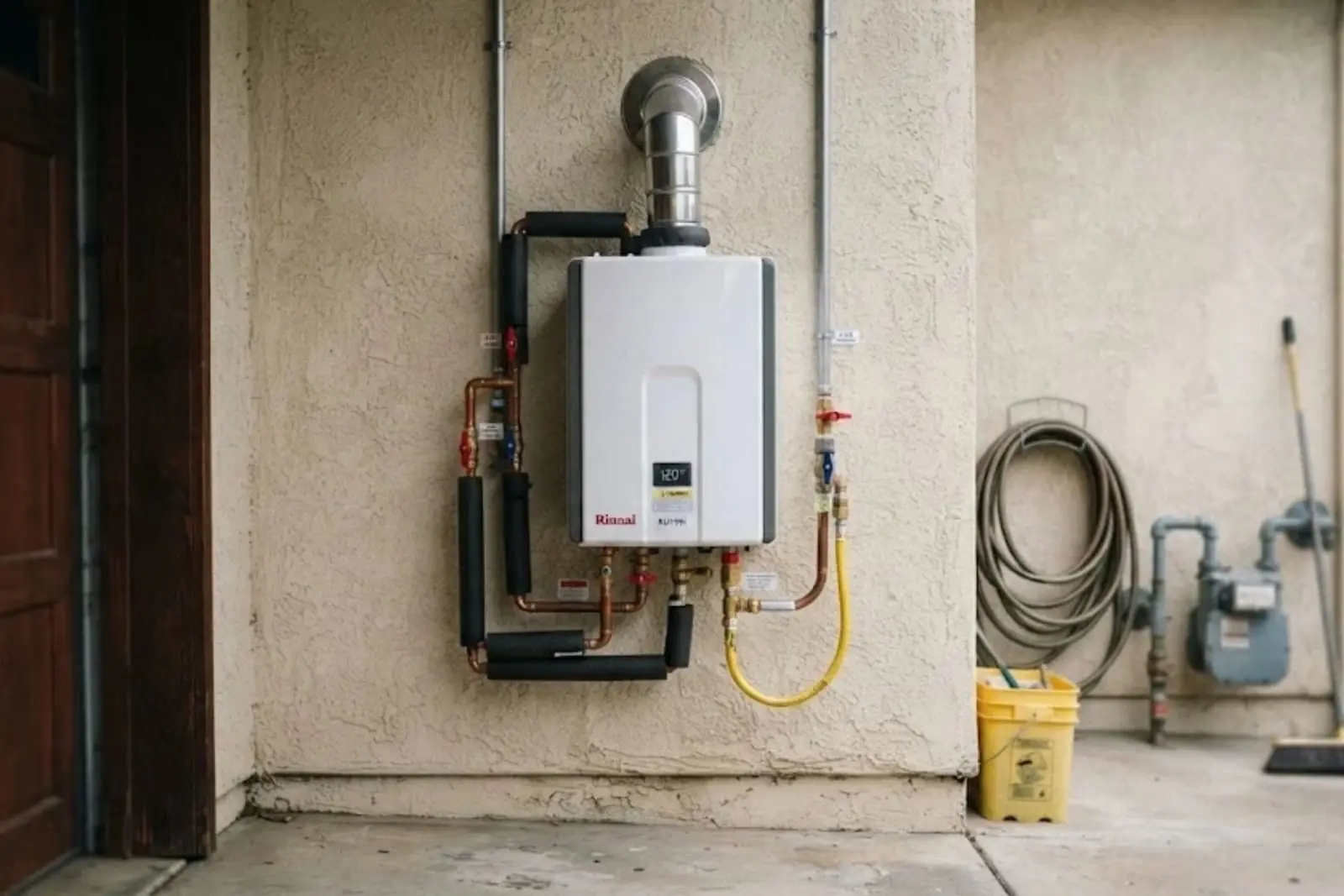
Why Homeowners Ask About Tankless
A tankless unit heats water only when you open a tap, so there is no tank to run out. It also hangs on a wall, which frees up floor space in a garage or utility room. Those are the reasons we hear most on the phone.
The trade is installation complexity. Most tankless heaters need a larger gas line, special venting and a water supply that is clean enough to protect the heat exchanger. Getting that right is what the first visit is for.
Side By SideTank Versus Tankless
Standard tank
- Lower upfront cost
- Simple installation with existing lines
- Limited hot water until it recovers
- Larger footprint in the utility space
Tankless
- Steady hot water for back to back use
- Wall mounted and compact
- Needs gas line and venting review
- Needs yearly flushing to stay efficient
Sizing Comes Before Anything Else
A tankless unit is rated by how many gallons per minute it can heat at a given temperature rise. Cold incoming water makes the rise larger, so a unit that works fine in July may struggle in January. We size for winter conditions, not summer.
| Household use | What to ask for |
|---|---|
| One bath, small household | A single unit with modest gas input |
| Two baths, family of four | A larger unit or a parallel setup |
| Large household with tubs and heavy use | Higher output units, often two linked units |
| 120 volt electric option | Works for point of use only, not whole house |
Flushing And Descaling
Calls about tankless flushing are among the most common we receive. Minerals can coat the inside of the heat exchanger, and scale cuts both flow and efficiency. Many manufacturers call for a vinegar flush or a descaling cycle on a regular schedule.
Because Lehi City does not publish a hardness number in the reports we reviewed, we suggest testing your own tap. A simple test kit tells you whether scale is likely, and the result shapes how often to flush and whether a softener makes sense. See our softener and filtration page for the next step.
RepairCommon Tankless Faults
Problems we diagnose
- Error codes after a power or gas interruption
- Cold water sandwich where hot water briefly turns cold
- Reduced flow from scale or a clogged filter screen
- Ignition failures and vent pressure faults
Tankless Unit Not Working?
Call and we will talk through the error code and the next step.
Gas And Venting In Lehi Homes
Many tankless units need a gas line larger than the one that served a tank. The plumber measures the run and checks capacity before quoting. Venting may need stainless or plastic pipe through a wall or roof, and the path matters as much as the unit.
Utah amendments to the plumbing code include water heater rules, and Lehi Building and Inspections at (385) 201-1035 can tell you what the city needs for your job. If you smell gas at any time, leave the house, then call 911 and the gas utility.
PricingWhat A Tankless Install Costs
Tankless installs are covered by the International Plumbing Code (IPC) as Utah amends it, plus the manufacturer instructions for venting, gas supply and clearances.
FAQsTankless Water Heater Questions
It will not run out like a tank, but it can reach its flow limit. If too many fixtures run at once, the temperature may drop.
Follow the manufacturer schedule and adjust for scale in your area. Test your tap to learn whether scale is likely, then ask us about a flush plan.
Possibly not. Many tankless units need a larger line than a tank heater, and the plumber measures the run before you commit.
Yes. We diagnose by error code and symptom, and we explain whether the fix is a flush, a part or a replacement.
No. A 120 volt unit suits point of use, such as a single sink. Whole house tankless units use gas or higher voltage supply.
It depends on use, gas supply and how long you plan to stay. We walk through your numbers on the phone before you decide.