
What Is The Toilet Doing
| Symptom | Common cause | Fix |
|---|---|---|
| Runs after flushing | Worn flapper or fill valve | Replace the part |
| Water at the base | Failed wax ring or loose bolts | Reset the toilet with a new seal |
| Clogs repeatedly | Trap blockage or a deeper line problem | Clear the line, camera if repeated |
| Weak flush | Clogged rim jets or low tank water | Clean jets and adjust |
| Rocks on the floor | Loose flange or uneven floor | Secure the flange and reset |
| Tank leaks | Cracked tank or bad bolts | Repair or replace |
Most of these are repairs, not new toilets. If the toilet is old, cracked or constantly failing, replacement can cost less over time.
Try This FirstQuick Checks Before You Call
Safe steps you can try
- Close the supply valve behind the toilet if water is running or leaking
- Lift the tank lid and check that the flapper seals on the bottom
- Use a flange plunger for a clog and avoid chemical cleaners
- Do not flush again if the bowl is full or rising
If water keeps rising or the supply valve will not turn, call right away. A valve that will not close is a repair of its own.
Emergency ResponseToilet Overflowing Late At Night
An overflowing toilet can soak a floor in minutes. Stop the flush, close the supply valve behind the toilet and put towels at the base. If the water is rising, call the 24/7 line and describe what is happening.
When other fixtures also gurgle or back up, the problem is deeper than the toilet. That is a job for sewer line cleaning, not a toilet repair.
Toilet Overflowing Right Now?
Call and we will help you stop the water and plan the visit.
Repair Or Replace
Repair makes sense when
- The toilet is in good condition
- Parts like the flapper or fill valve are failing
- The base seal is the only fault
- The model is still available for parts
Replace makes sense when
- The porcelain is cracked
- The flush is weak and parts are discontinued
- You want a more efficient model
- The toilet is repaired repeatedly
Installing A New Toilet
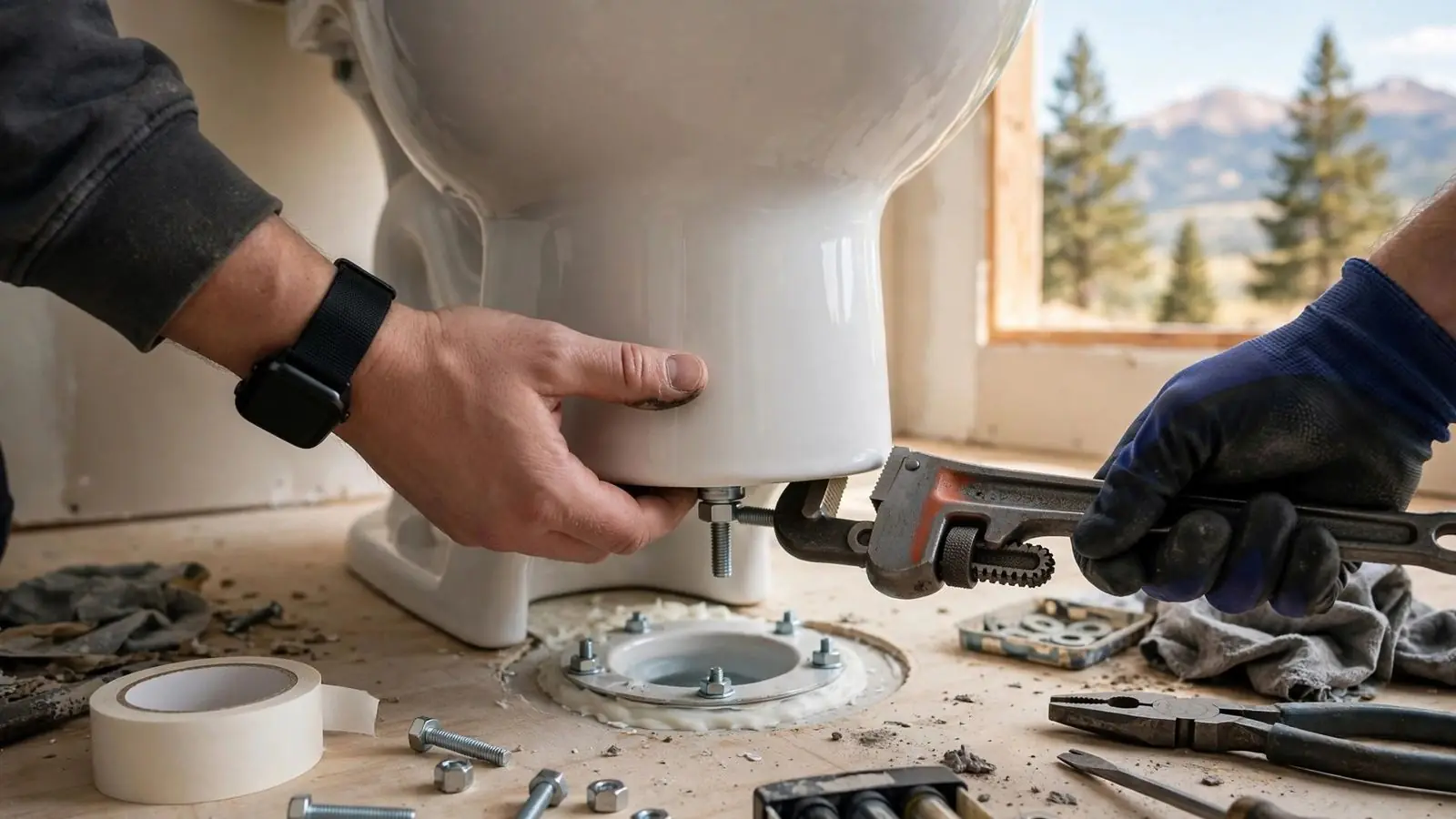
New toilet installs include setting the flange, a new wax ring, new supply line and a shutoff valve if the old one is worn. We also check the floor for rot, because a soft floor is a hidden source of rocking. The visit usually takes a couple of hours.
Small Parts, Big LeaksSupply Valves And Fill Valves
A shutoff valve behind the toilet that seizes can turn a small repair into a house wide shutdown. We replace worn supply valves and fill valves as part of the visit, since parts that are decades old tend to fail together.
PricingWhat Toilet Repair Costs
Quick Checks Before You Call
To test for a silent leak, add a few drops of food coloring to the tank and wait fifteen minutes without flushing. Color in the bowl means the flapper is leaking. A worn flapper is a common cause of a running toilet and a rising water bill.
Check the chain too. If it is too tight, the flapper cannot seal, and if it is too loose, the flush can be weak. The fill valve is another common failure when the tank keeps refilling.
FAQsToilet Repair Questions
Yes. An overflowing or leaking toilet is a 24/7 call. Close the supply valve, then call and the dispatcher will schedule the visit.
The flapper or fill valve is usually worn. Replacing the part often ends the running, and the plumber can do it in one short visit.
Water around the base, a rocking toilet or a sewer smell are signs. The toilet is lifted and reset with a new ring.
It may be a partial blockage in the trap or line, or a weak flush. A camera look can find a deeper cause.
Yes. Call and tell us the model and rough in size so we can confirm it fits the space.
Yes. A failed fill valve or float is the usual cause, and it is a quick repair.