
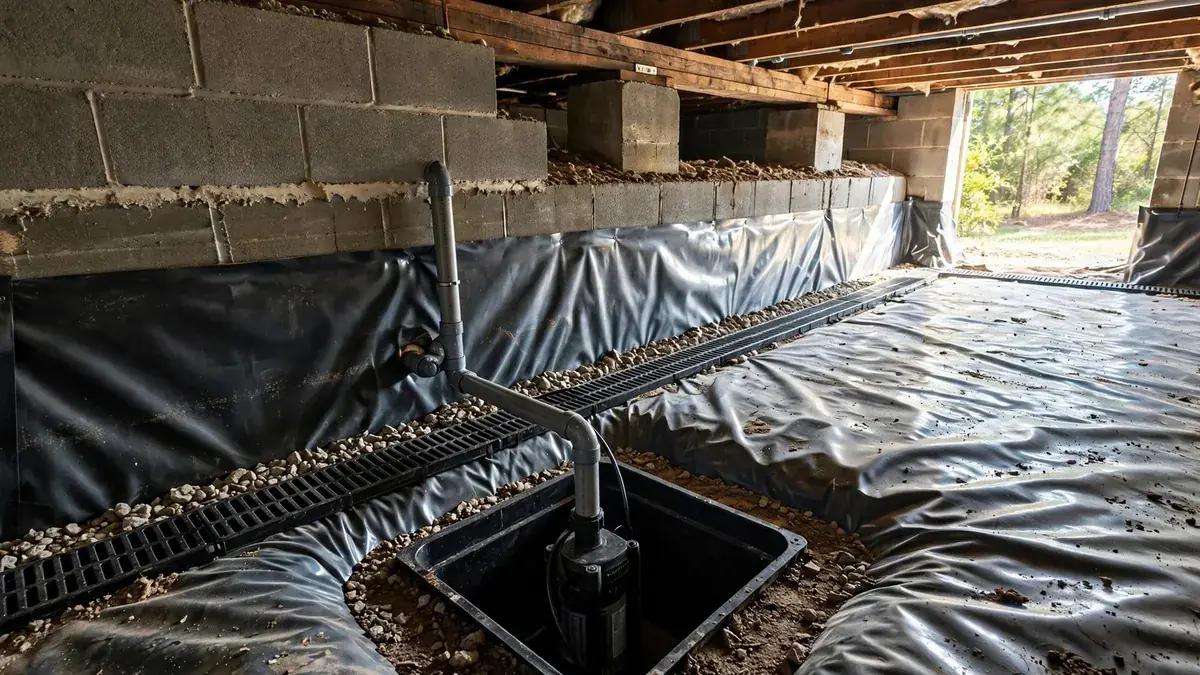
Waterproof basement flooring such as rubber tiles, vinyl planks and sealed tile can handle moisture, but none of them stops water from entering the basement. If water is coming from a leak, a window well or groundwater pressure, the floor sits on top of the problem. Fix the source first, then choose flooring that suits what is left.
This guide compares common basement floors and explains the checks that come before any flooring purchase. If your basement stays wet, our basement waterproofing page explains how we separate plumbing sources from drainage sources.
Source FirstFind Where The Moisture Comes From
| Clue | Likely source | Check |
|---|---|---|
| Damp after rain or snow melt | Groundwater or surface runoff | Gutters, grading, window wells and sump |
| Damp after showers or laundry | Drain or supply leak | Leak detection and a meter test |
| Damp all year | Hidden leak or high water table | Leak detection, then drainage |
| Condensation on cold pipes and walls | Humidity | Dehumidifier and ventilation |
A simple moisture test helps. Tape a square of plastic sheeting to the slab and leave it for a day or two. Moisture under the plastic means water vapor is coming up through the slab. Moisture on top means the air is humid.
Flooring TypesHow Common Basement Floors Compare
| Flooring | Moisture behavior | Watch for |
|---|---|---|
| Rubber tiles or rolls | Resist water and tolerate damp slabs | Trapped moisture beneath if the slab is wet |
| Vinyl plank | Water resistant planks, joints can leak | Water under planks can hide mold |
| Sealed tile | Durable when properly installed | Cold and hard, grout can stain |
| Epoxy coating | Seals the slab surface | Fails if moisture pushes up from below |
| Carpet and wood | Absorb water | Not suited to a damp basement |
Rubber is a good option for gyms and play areas because it handles damp better than wood or carpet. It still needs a dry enough slab to avoid trapped moisture under the mat.
Before You InstallDrainage And Plumbing Checks
Check these before flooring
- Downspouts discharge several feet from the foundation
- Soil slopes away from the house
- Window wells are clear and drained
- The sump pump runs and the discharge line is clear
- No active leak shows on a meter test
A sump pump that fails in spring will wet a new floor just as quickly as an old one. See our sump pump page for how to test the pump and when to add a backup.
SafetyRadon And Your New Floor
Before covering a slab with new flooring, remember that radon moves up through concrete. State guidance puts the Utah average test at 5.3 pCi per liter, above the EPA action level of 4. Test the lowest living level for two to four days.
Flooring does not stop radon. If your test is high, a radon mitigation contractor handles it, and sealing the sump pit lid and floor cracks can be part of the plan.
Plumbing SourceWhat To Do If You Find A Leak
If the meter test shows a leak, stop and locate it before any flooring goes down. A pipe leak under a new floor means tearing the floor up. Our leak detection service finds the spot with listening gear and thermal imaging.
Basement drain and pit work is open to Lehi and American Fork homeowners. Check the service areas page if you live somewhere else.
Before You InstallMoisture Tests Worth Doing First
Tape a one foot square of clear plastic to the slab and leave it for two days. Moisture under the plastic means the slab is passing water vapor. Droplets on the top side mean the room air is the problem instead.
Floating floors such as vinyl plank tolerate small amounts of moisture better than glued or nailed floors. Rigid core products are common in basements for that reason. Still, no floor fixes a leak, and water that gets under the planks stays trapped.
Finish the plumbing work before the flooring goes down. Drains, sump pits and supply lines are much cheaper to correct before they are covered. Leave an access point to cleanouts and shutoffs.
LayoutPlan Around The Utilities
Know where the sump pit, floor drain, water heater and main shutoff sit before you pick a layout. Flooring should never box in a cleanout or a shutoff valve. A removable panel or a small access door saves a lot of trouble later.
If you plan a basement bathroom, talk to a plumber before the framing goes up. Drains below the level of the sewer line may need a sewage ejector, and that changes the floor plan.
Questions about your own house? Call (385) 488-1892 and a person will answer.
FAQsBasement Flooring Questions
Rubber resists water, but it does not stop water from coming through a slab. A wet slab can still trap moisture under the mat.
Only after you find and fix the moisture source. Some flooring tolerates damp better than others, but none fixes a leak.
Testing is a good idea. A short test kit left in the lowest living level for a few days shows where your own house stands.
Snow melt and rain raise groundwater and send water toward foundations. A working sump pump and good drainage help.
Before. Fixing drainage after the floor and walls are in costs far more.