
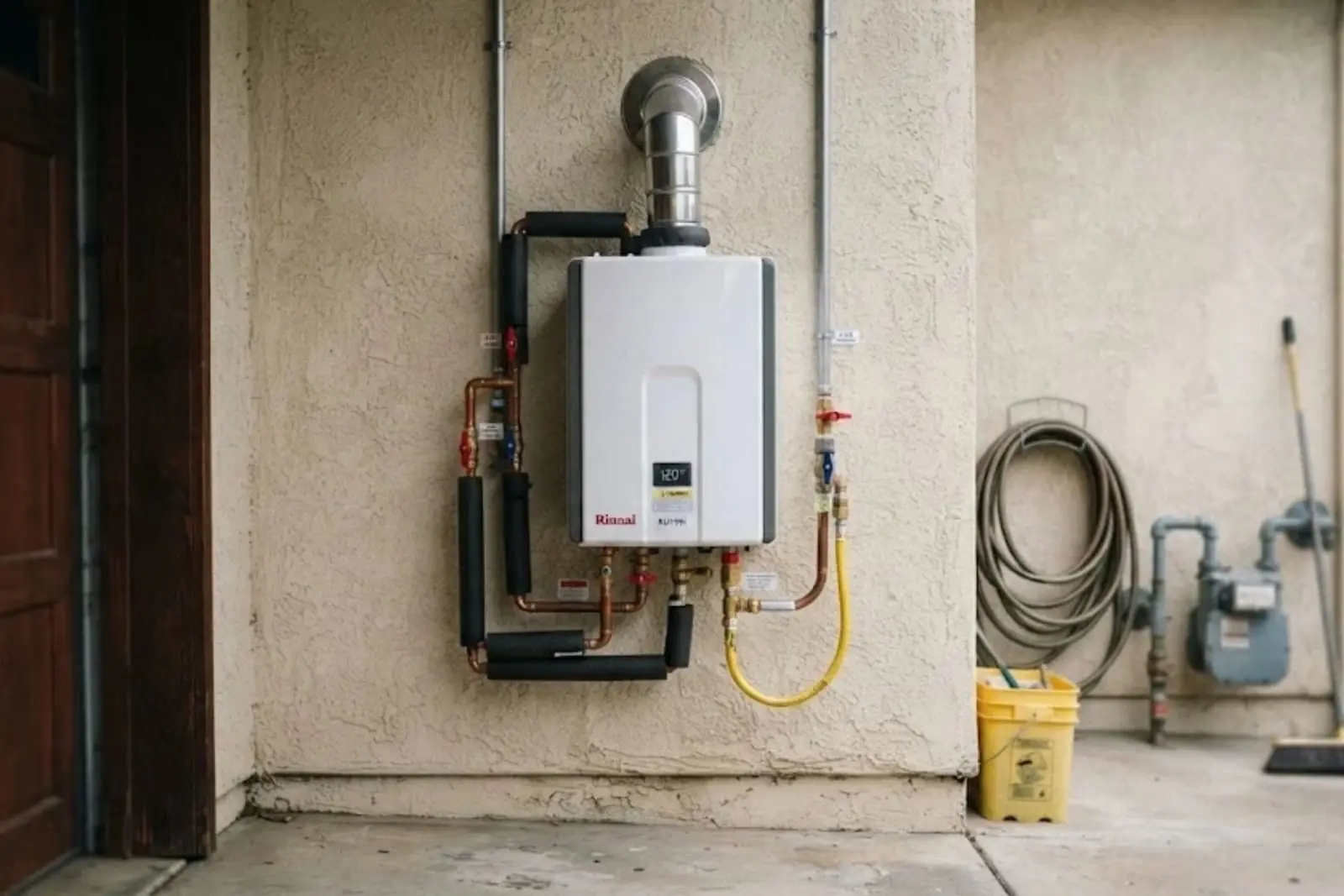
A 120 volt tankless water heater can heat water for a single sink, a small hand wash station or a short shower at a very low flow. It cannot heat a whole house. The power it can draw from a standard household outlet is a small fraction of what a whole house tankless unit needs.
If you want one small tap to run hot without waiting, a plug in unit is a fair choice. If you want showers and laundry from the same heater, you need a gas unit or a high amperage electric unit. Our tankless water heater page covers those options.
The PhysicsWhy Power Limits The Output
Heating water takes energy. A shower at a modest flow can need a lot of power, because the heater must raise the temperature of cold incoming water by tens of degrees every second. A 120 volt outlet on a typical household circuit cannot supply that much power safely.
Whole house electric tankless units use large dedicated circuits at higher voltage. Gas units use burners rated in thousands of BTU per hour. Both are installed with a plan, and that plan often includes a panel check or a gas line upgrade.
120 volt plug in unit
- Good for one sink or a hand wash station
- Plugs into a standard outlet
- Lower flow, limited temperature rise
- Not meant for showers or laundry
Whole house tankless
- Feeds several fixtures at once
- Needs a gas line or a high amperage circuit
- Needs venting if gas
- Sized by flow rate and winter water temperature
Places A Small Unit Makes Sense
Distant bathroom sink
A tap far from the water heater can take a long time to run hot. A small unit at the sink fixes the wait.
Garage or shop sink
Hot water for washing hands and parts without running a line from the house heater.
Cabin, ADU or guest suite
A single sink or small kitchenette that does not justify a full water heater.
Kitchen prep sink
A small booster for rinsing when you do not want to wait for the main heater.
Even in these cases, check the circuit. Some small units use more power than a shared outlet circuit can safely carry.
Before You ShopWhat Needs A Plan Before You Buy
Questions to answer first
- How many gallons per minute do you need at the fixture?
- How cold is the incoming water in January?
- Is there a dedicated circuit with enough capacity?
- Does the manufacturer require a certain water pressure or flow?
- Who will handle the plumbing connections and any permit?
| Use case | Likely heater type |
|---|---|
| One small sink | 120 volt point of use |
| One bathroom with a shower | Higher voltage electric or gas unit |
| Family home with laundry and tubs | Gas whole house unit or a tank |
| Tiny home or cabin | A small gas unit or a compact tank |
Maintenance And Scale
Small tankless units have small heat exchangers, and scale can build up inside them. If you notice white crust on your fixtures, test your tap before you buy any heater. A test kit costs little and tells you whether a flush plan or a softener belongs in the picture. See our softener and filtration page.
Many of our calls are for tankless flushing and error codes, not new installs. If you already own a unit that is acting up, ask us about repair before you replace it. We also serve nearby towns, including American Fork, and the full list is on the areas page.
Before You BuyQuestions To Settle Before You Buy
A 120 volt tankless unit draws far less power than a whole house model. That also means it heats a smaller flow of water. Think of it as a point of use heater for one sink or a small bathroom, not a replacement for a tank that feeds a shower and a dishwasher at once.
Check the flow rating on the box and compare it with the fixture. A bathroom faucet uses far less water than a shower, and a small unit can only raise the temperature so far when the incoming water is cold. Groundwater is colder in winter than in summer, so the same unit can feel weaker in January.
Ask about the outlet as well. A dedicated circuit and the right receptacle matter, and a licensed electrician should handle any new wiring. We can place the plumbing side, including shutoffs and any relief connection the maker calls for.
Questions about your own house? Call (385) 488-1892 and a person will answer.
FAQs120 Volt Tankless Questions
Not at a normal flow. Showers need far more power than a standard outlet circuit provides, so a gas unit or higher voltage electric unit is the usual answer.
It depends on the unit and the circuit. Ask the manufacturer and an electrician if the circuit may be shared or too small.
Yes, but only for a single tap. It does not replace a main water heater for the house.
Call Lehi Building and Inspections at (385) 201-1035. The city page we reviewed does not spell out which water heater jobs need one.
Winter incoming water in Utah can be very cold. The coldest month sets the heater size for a whole house unit.