
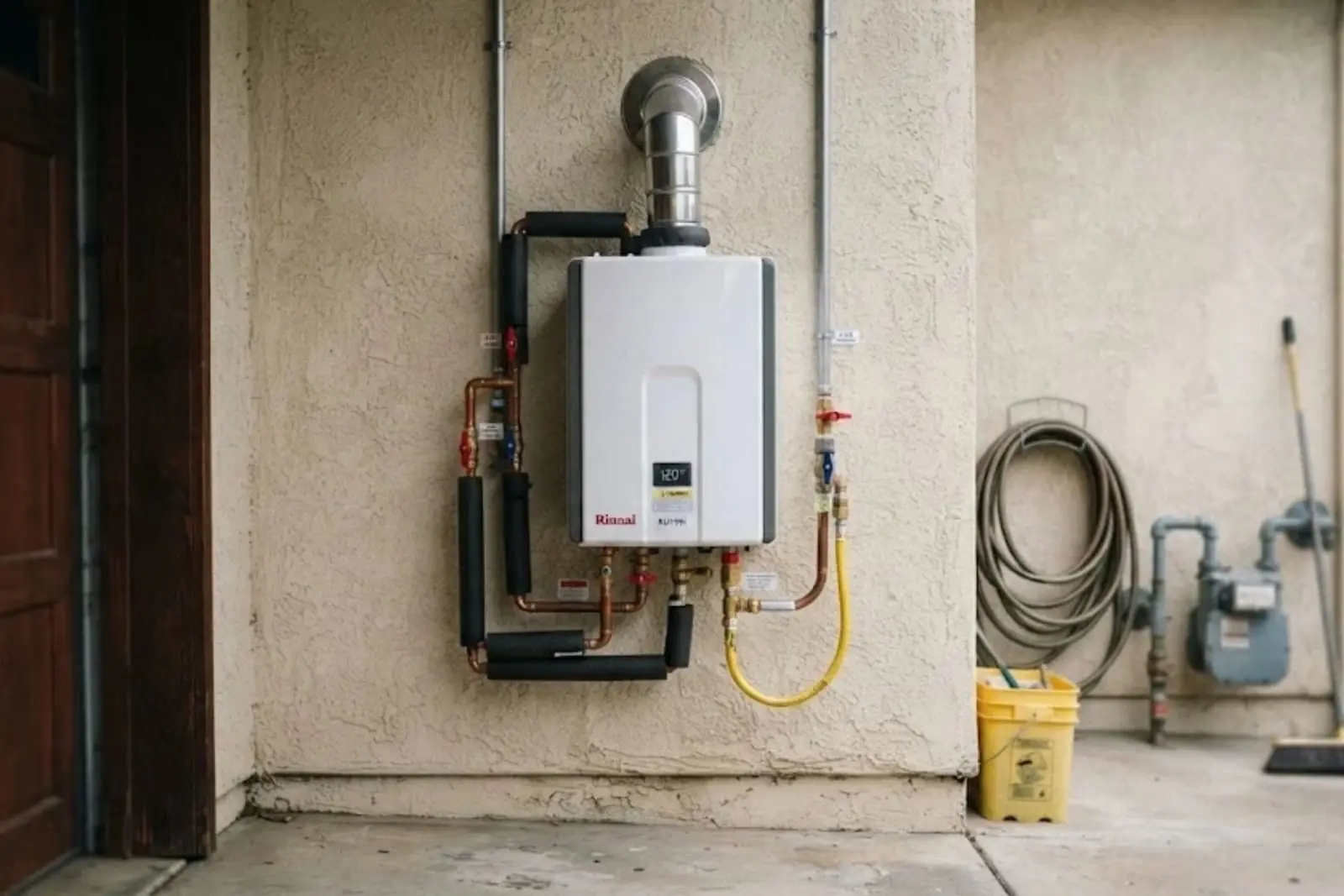
A family of five usually needs a whole house tankless unit rated around the high single digits to low teens in gallons per minute at winter temperature rise, or two linked units. The number comes from how many fixtures run at the same time, not from headcount. A busy morning with two showers, a dishwasher and a washer sets the real demand.
This guide shows how to count that demand and how winter water temperature changes the size. For a walk through of your home, see our tankless water heater service.
Peak FlowCount The Fixtures That Run Together
| Fixture | Typical flow when running |
|---|---|
| Shower | About two gallons per minute with a standard head |
| Bathroom sink | About one gallon per minute |
| Kitchen sink | About one to two gallons per minute |
| Dishwasher | Around one gallon per minute at the hot tap |
| Clothes washer | Around two gallons per minute at the hot tap |
Add up what could run together at peak. Two showers, a washer and the kitchen sink can reach seven or eight gallons per minute. Those numbers are typical, so check your own fixtures.
Why Winter CountsWinter Temperature Rise Changes The Size
A tankless heater is rated by how much it can raise the temperature at a given flow. Colder incoming water means a bigger rise is needed to reach the same hot temperature. A unit that handles your peak flow in July may fall short in January.
Always size from the coldest month. Ask the manufacturer for the flow rate at the rise you need, and be wary of marketing numbers based on mild water.
Sizing checklist
- The number of fixtures that can run at once
- The target hot water temperature at the tap
- The coldest incoming water temperature
- The unit flow rating at that temperature rise
- The gas input rating and line capacity
One Large Unit Or Two Linked Units
One large unit
- Simpler installation
- Lower purchase cost
- One thing to service
- A single failure leaves no hot water
Two linked units
- Higher peak capacity
- One can keep running if the other fails
- Needs more wall space and gas supply
- Higher purchase and install cost
For many families of five, a single high flow unit is enough. If your layout has a distant bathroom or you have a large soaking tub, two units may fit better.
Gas LineGas Supply Is Often The Limit
Big tankless units draw a lot of gas. The existing line that fed a tank may be too small, and the meter may need to supply the extra load. Ask your gas utility whether the meter and line can handle the added demand.
A plumber measures the pipe run and checks line size before you commit. Venting is the other common limit, because large units need a larger vent path.
CareMaintenance For A Busy Household
Heavy use means more heat cycles and more scale if the water is hard. Many manufacturers call for a flush on a regular schedule. Test your tap for hardness so you know whether a softener belongs in the plan, and read our water treatment page.
Tankless sizing visits cover Lehi and American Fork. For other addresses, check the service area page.
SizingSizing By Fixtures, Not By Headcount
Flow rate in gallons per minute is the number that matters. Add up the fixtures likely to run at the same time, such as two showers and a dishwasher. Compare that total with the unit rating at your incoming water temperature.
A larger family does not always need a larger unit if showers are spread across the morning. But two teenagers showering while the laundry runs can strain a unit that looked big enough on paper. Think about your busiest hour, not your average one.
Gas lines and vent sizes often need upgrading for a whole house unit. Ask for those costs in the quote so the total is clear.
CostQuestions About Cost And Install
A tankless unit costs more up front than a tank and can cut standby heat loss. Savings depend on how you use hot water, so treat any maker estimate as approximate. We give a clear price before work starts so you can compare.
Descaling matters too. Mineral buildup reduces performance, and many makers recommend periodic flushing. Ask how often your unit needs it and whether the install includes service valves for flushing.
Questions about your own house? Call (385) 488-1892 and a person will answer.
FAQsFamily Of Five Tankless Questions
Often yes, if it is sized for your peak flow at winter temperature. Heavy use or a large tub can push you toward two units.
Maybe not. Large tankless units use more gas than a tank, and the line and meter may need to be checked.
A properly sized unit handles it. An undersized unit lowers the temperature or the flow.
Follow the manufacturer schedule and adjust for scale. Test your tap to learn whether scale is likely.
It depends on use, gas cost and install cost. We can walk through your numbers on the phone.