
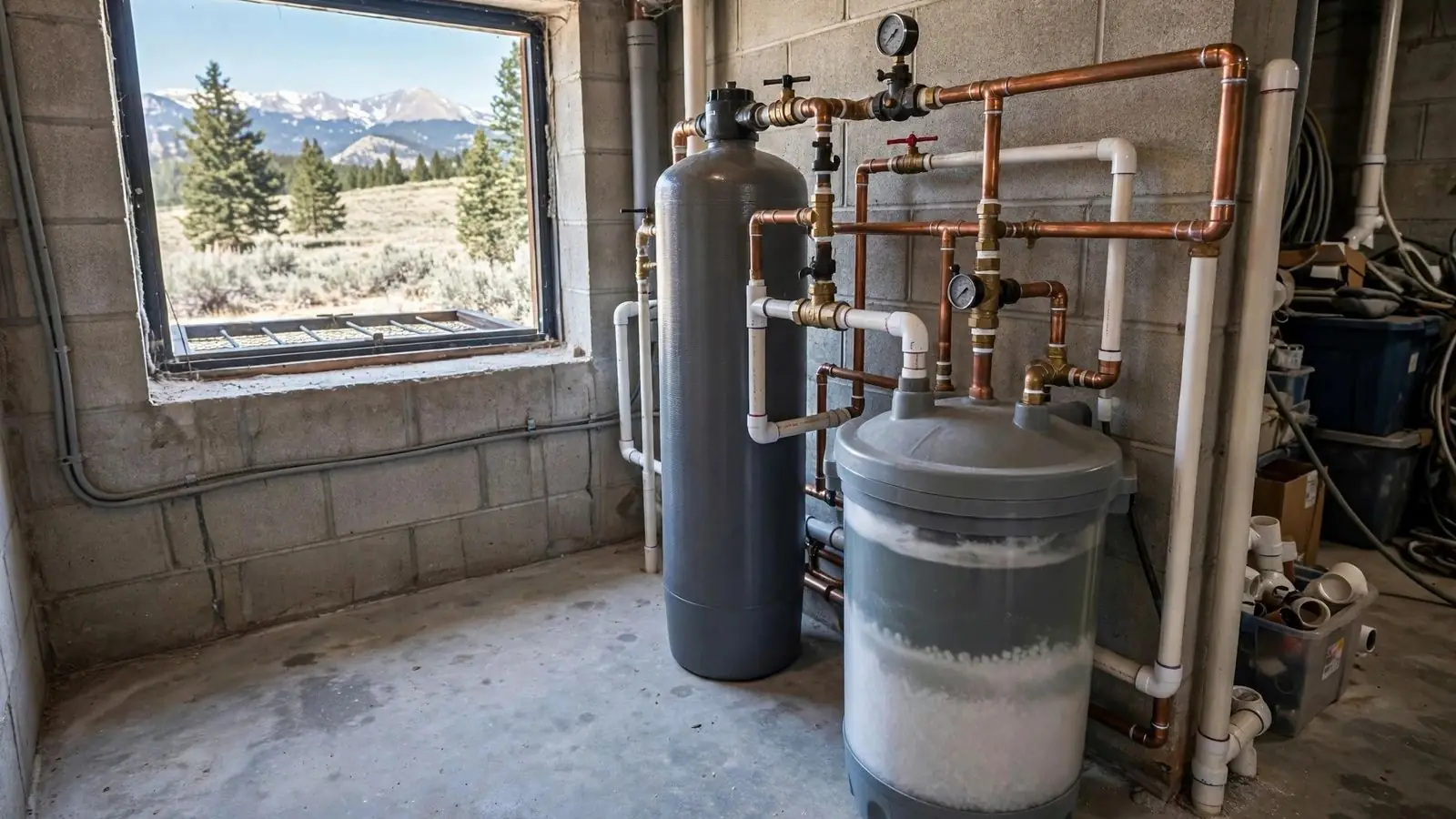
A whole house water filtration system treats water at the point where it enters your home, so every tap gets filtered water. Which filter you need depends on what is in your water, and the only way to know is to test. Common filters handle sediment, chlorine taste and some chemicals, while softeners and reverse osmosis handle other jobs.
This guide explains the main systems and what to test first. If you want help sizing equipment, our softener and filtration page covers testing and installation.
Quick GuideMatch The Filter To The Problem
| What you notice | Common filter type | What it does |
|---|---|---|
| Chlorine taste or smell | Activated carbon | Reduces chlorine and some taste and odor compounds |
| Cloudy water or particles | Sediment filter | Traps sand, rust flakes and debris |
| White scale and spotted glasses | Water softener | Removes hardness minerals |
| Taste at the kitchen tap only | Reverse osmosis at the sink | Reduces many dissolved solids |
| Concern about lead | Filter certified for lead reduction | Reduces lead if certified and maintained |
No single filter does everything. A combination of a sediment filter, a carbon filter and a softener is common, and an RO tap is often added at the kitchen sink.
Know Your WaterTest Before You Buy
Home test kits and lab tests tell you hardness, chlorine and other values. The result decides which filter makes sense. Buying a system before you test can lead to equipment that does not fit the problem.
What to test for
- Hardness, if you see scale
- Chlorine, if taste is the complaint
- Iron and sediment, if you see stains or cloudiness
- Lead, if your home is older
- Total dissolved solids, if you are considering RO
What Lehi City Reports
Published city water quality reports list sodium, sulfate and total dissolved solids ranges and name chlorine as the disinfectant. The reports we reviewed do not publish a hardness number, so we cannot give one for your address.
The city reports its lead and copper sampling and says homes built before 1986 are more likely to have lead pipes or solder in house plumbing. If you are concerned, ask the city about testing and consider a filter certified for lead reduction as a stopgap while you plan a repipe.
Living With A FilterInstallation And Maintenance
Pick a location
Near the main line with room for service and a bypass.
Set up the system
Install filters in order, with pressure gauges where useful.
Test results
Check flow and pressure after installation.
Replace on schedule
Cartridges, salt and media need regular service.
A clogged filter lowers flow and pressure. Put reminders on your calendar for cartridge changes, and ask the plumber for a maintenance schedule when the system goes in.
PlanningCost Factors
System type, size and installation difficulty drive price. Larger households need higher flow filters, and a softener needs a drain connection and sometimes an outlet. We give a clear price before work starts after we see your test result.
Water testing and equipment sizing happen in Lehi and in American Fork. The service area page has the full coverage list, or read about tankless water heaters if scale is hurting a heater.
UpkeepMaintenance You Should Plan For
Every filter needs new media or new cartridges on a schedule. Sediment filters clog first, and low pressure at the tap is often the first clue. Ask for the maker replacement interval and set a reminder on your phone.
Carbon filters lose their ability to reduce taste and odor as they fill. A filter kept in service too long stops doing its job. Keep a spare cartridge on hand and write the install date on the housing.
A bypass valve and pressure gauges around the filter let you service it without shutting off the whole house. Ask us to include those parts in the quote.
Buying SmartQuestions To Ask Before You Sign
Ask what complaint or contaminant the system is meant to address and how the maker backs that claim. Look for independent certification for the specific claim, such as lead reduction, rather than a general marketing line. A system matched to your own test result is worth more than one with a long feature list.
Ask for the full cost over several years, including cartridges, salt or media and any service visits. Ask where the unit will sit, how much clearance it needs and whether it needs a drain or an outlet nearby.
Questions about your own house? Call (385) 488-1892 and a person will answer.
FAQsWhole House Filtration Questions
It depends on what bothers you and what your test shows. Chlorine taste, sediment and scale each have different fixes.
Most filters do not. A softener removes hardness, while a carbon or sediment filter does a different job.
Only filters certified for lead reduction do. Check the certification and follow the replacement schedule.
It depends on the cartridge and your water. Follow the manufacturer schedule and change sooner if flow drops.
The reports we reviewed do not list a hardness number. Test your own tap for an accurate result.